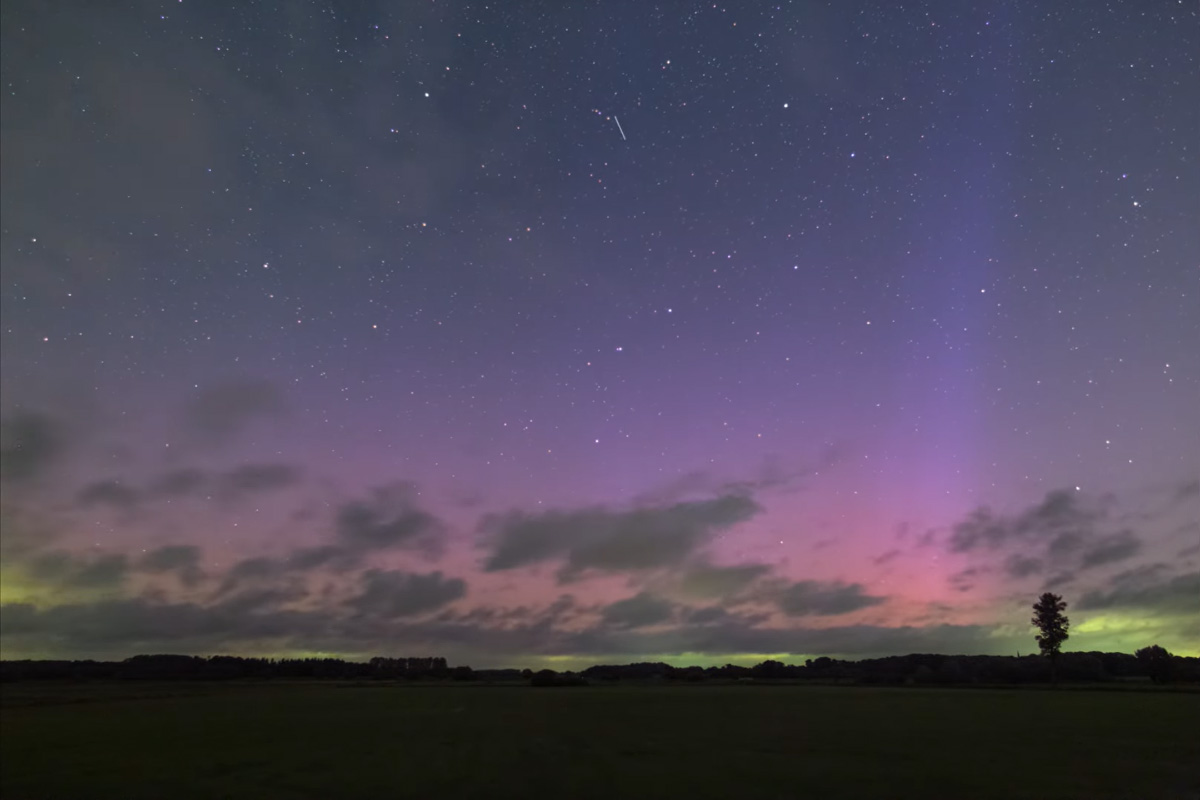
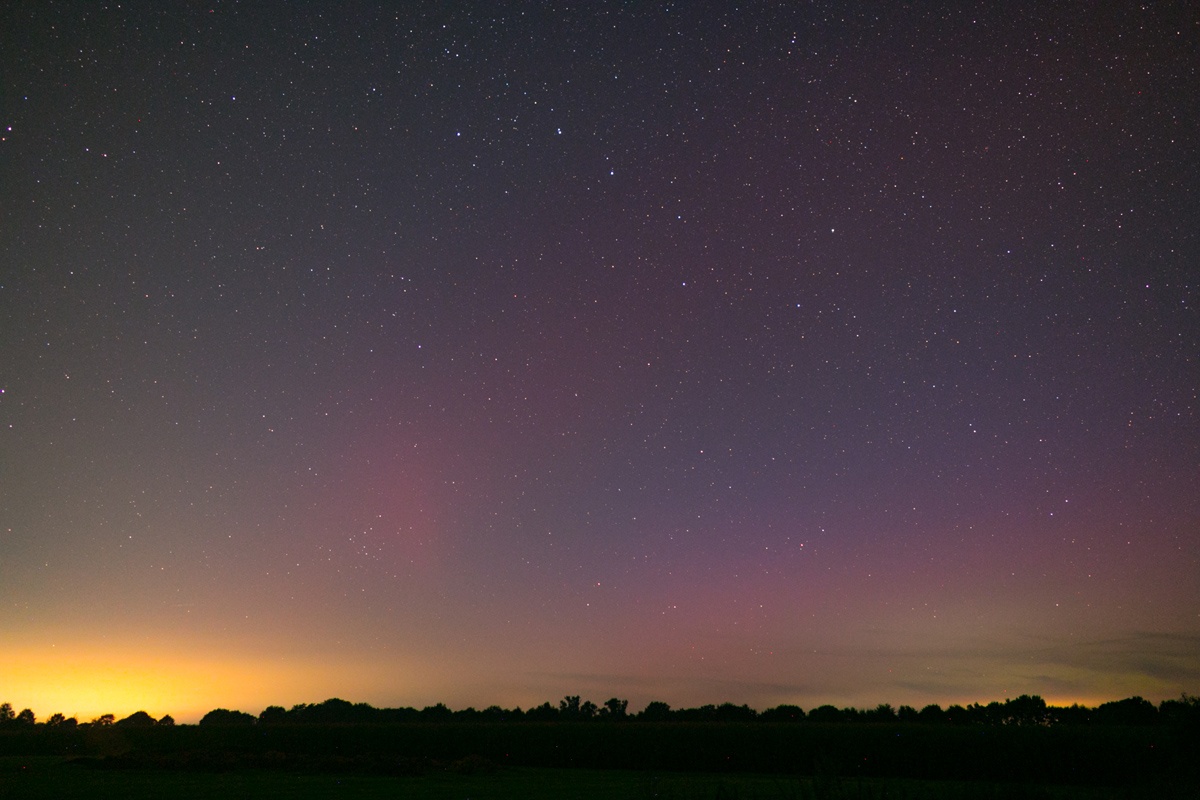
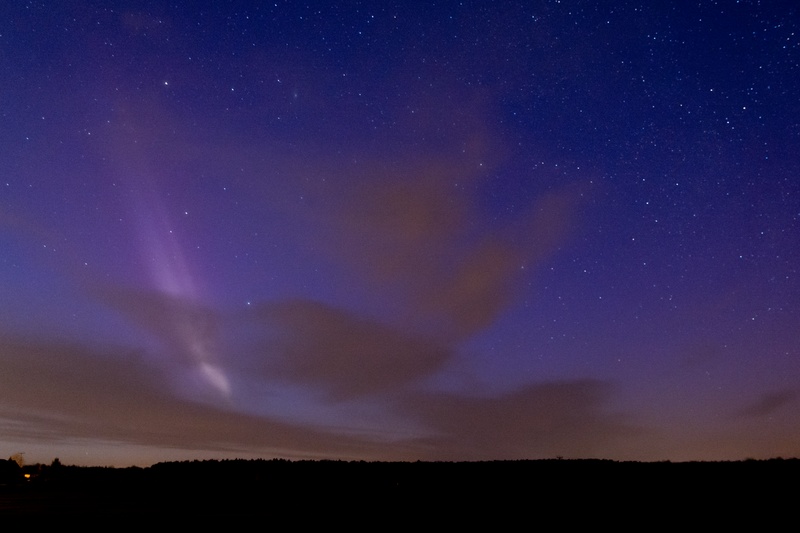
Giant Blue Rays (GBR) are exceptionally high-reaching aurora beams. Normally, auroras occur at altitudes below 600 km. This is because, in the higher atmospheric layers, there are no longer enough air molecules to make the aurora visible. The Giant Blue Rays can reach a height of up to 3500 km. Their appearance is, as the name suggests, blue to violet. The color indicates the emission of nitrogen molecules, where light with a wavelength of 428 nm is produced.
So far, no cause for the phenomenon of GBRs has been found.
An analysis of GBRs from Germany was published by Michael Theusner in the AKM forum.
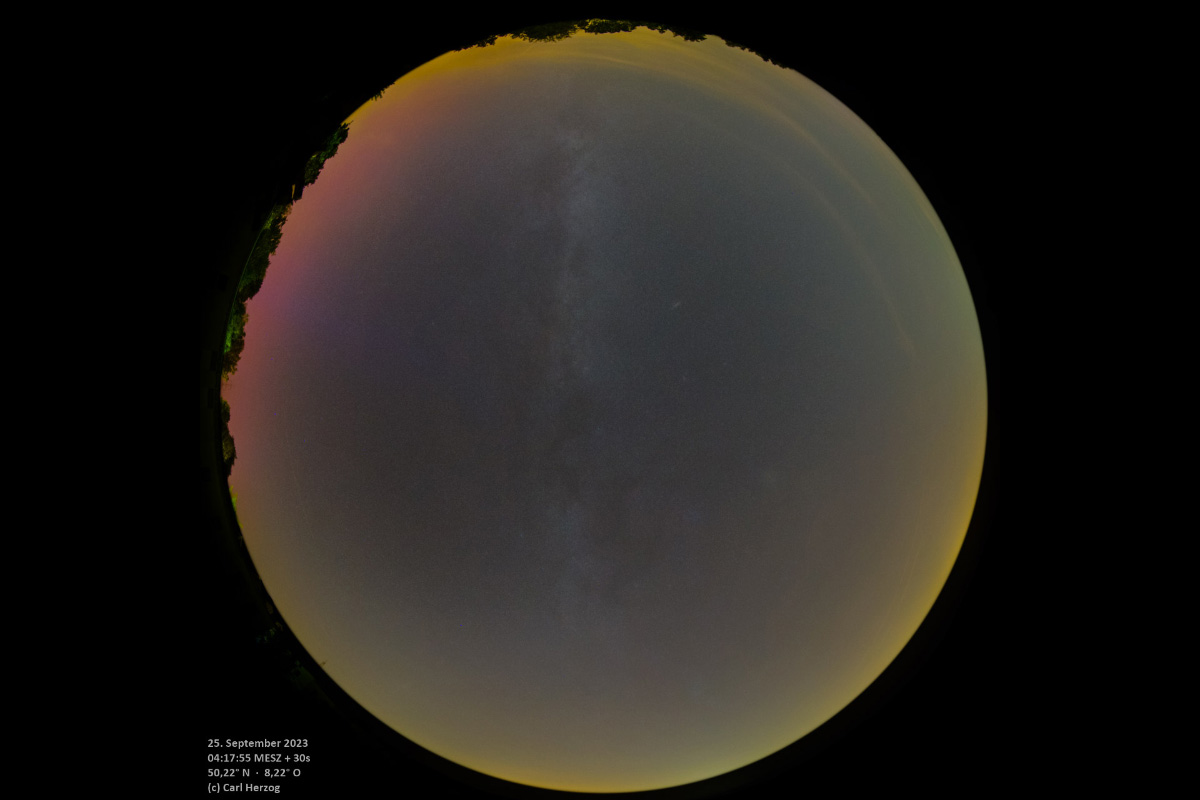
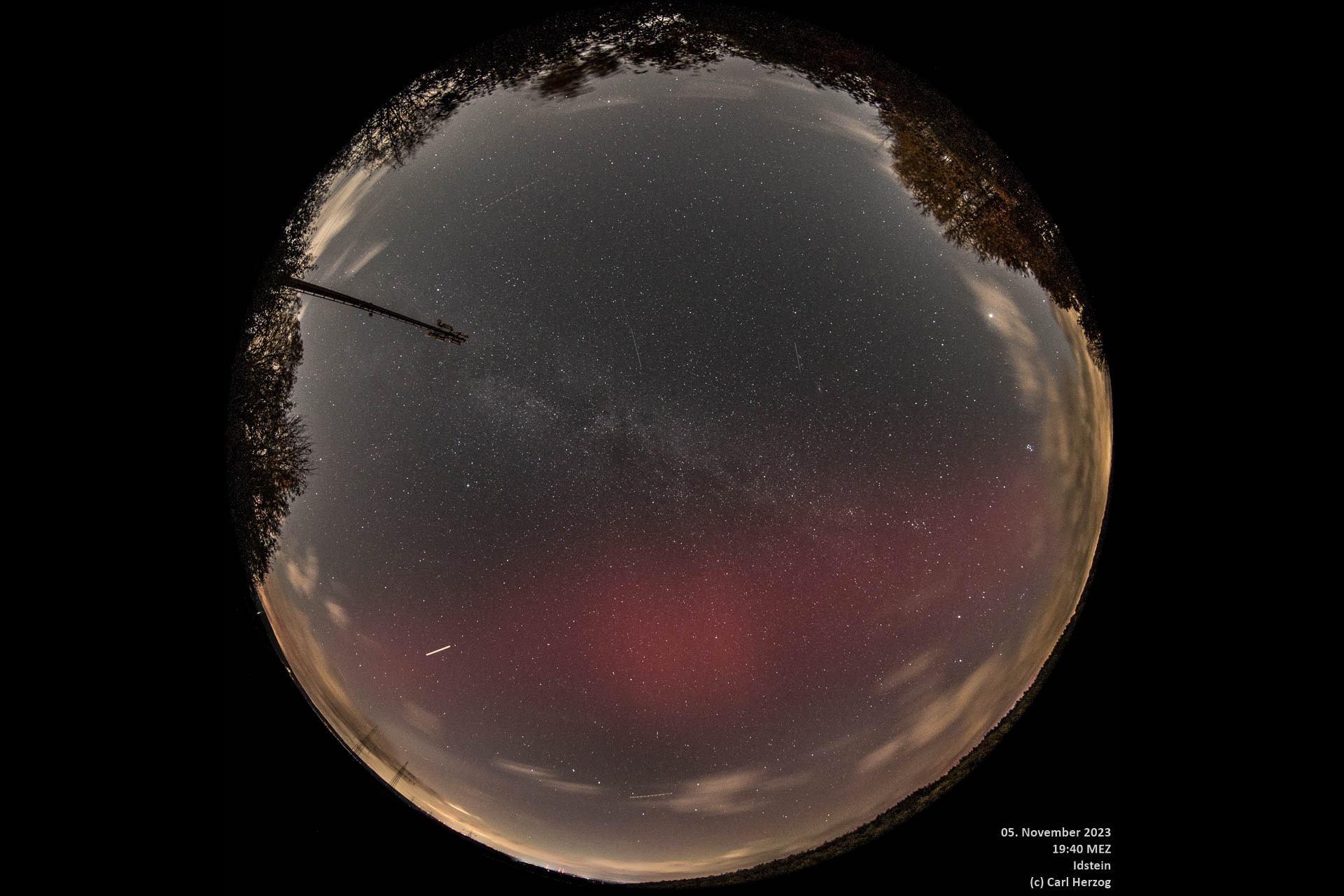
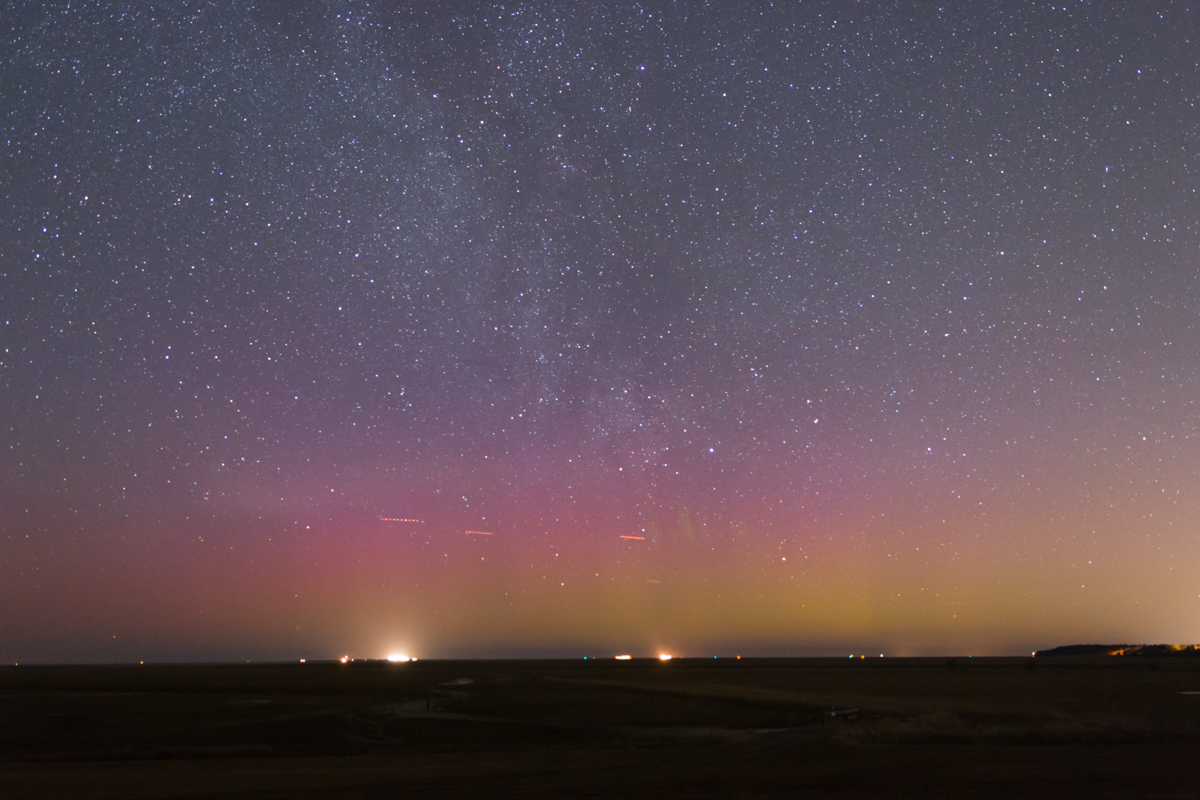
The SAR (Stable Auroral Red) aurora was only discovered in 1956. The reason for this is that this aurora is barely visible to the human eye. It is characterized by a weak red auroral arch that extends from the western horizon, across the entire sky to the eastern horizon and is relatively long-lasting. SAR aurora emits red light at a wavelength of 630 nm and occurs in the ionosphere at an altitude of about 400 km. Electrons are responsible for its formation.
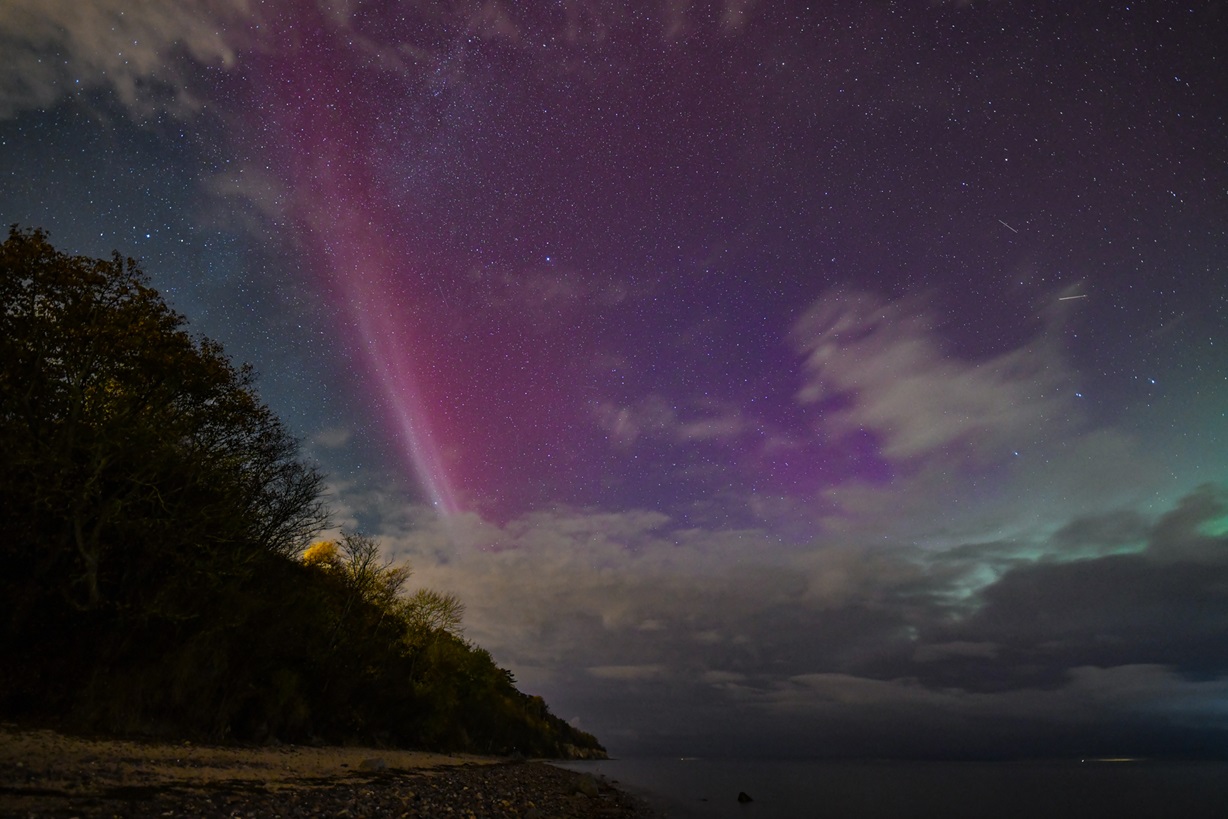
The abbreviation STEVE stands for Strong Thermal Emission Velocity Enhancement. The luminous phenomenon occurs south of the auroral oval (Northern Hemisphere). It appears in the form of a narrow violet and green band in the sky. Typical for STEVE is the appearance of green aurora in the form of a "picket fence" below the band.
Strictly speaking, STEVE is not an aurora. It forms at an altitude of about 450 km in the ionosphere and is caused by an unusually fast and hot ion drift. Amateur scientists have observed that SAR arcs can transform into STEVE and back.
The first description of the STEVE phenomenon was published in 2018.
Evidence of STEVE in Germany (selection):
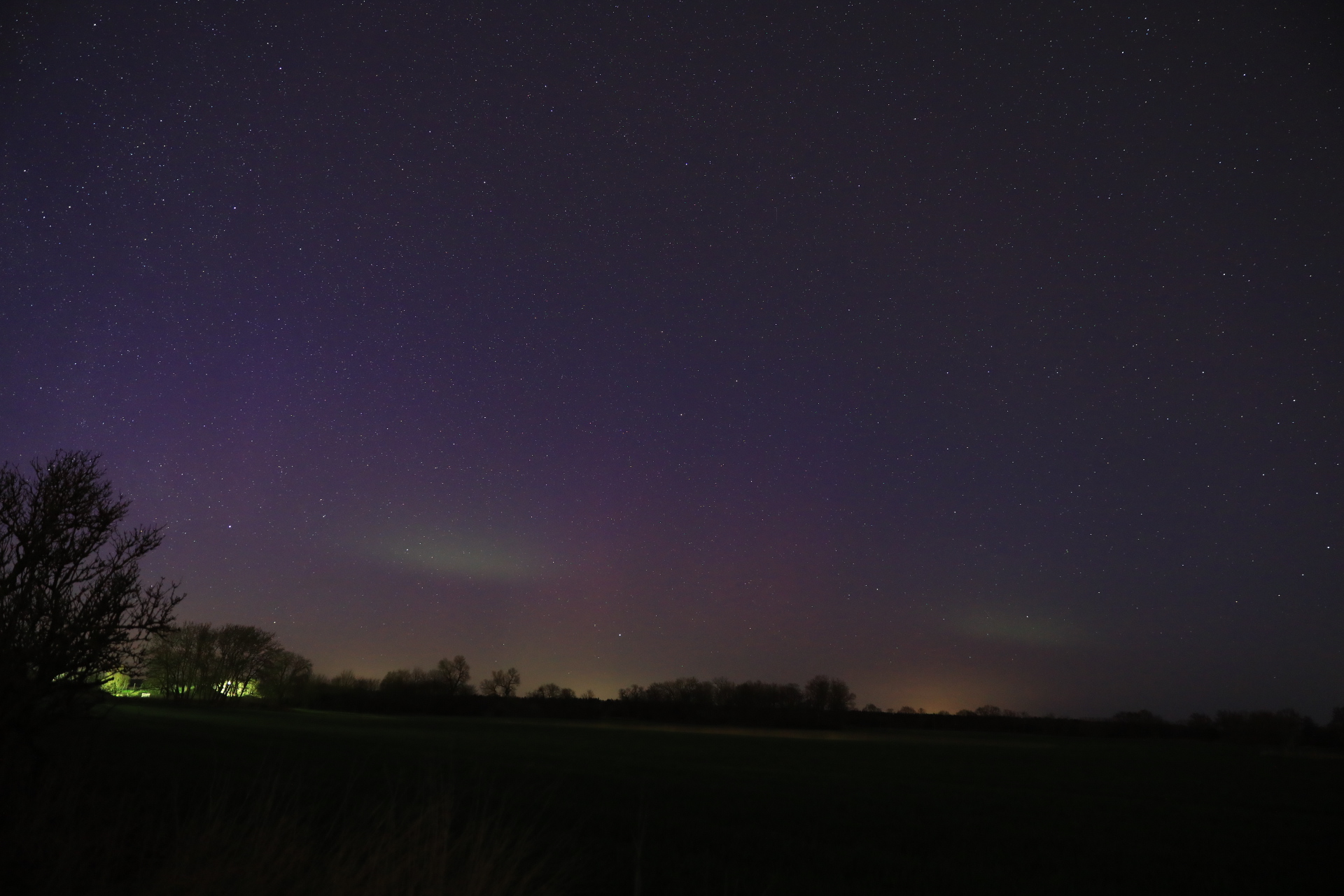
The RAGDA (Red Arc with Green Diffuse Aurora) phenomenon appears as standalone green spots that pulse in brightness. It is also characterized by deep red arcs that occur south (assuming the aurora occurs in the Northern Hemisphere) of the auroral oval.
The RAGDA aurora was first described in the following publication in 2022: "Nishimura et al. (2022). Interaction Between Proton Aurora and Stable Auroral Red Arcs Unveiled by Citizen"
Evidence of RAGDA in Germany (selection):
The so called dune aurora was first described scientifically in 2020. It was based on photos taken by Finnish amateur observers on 07.10.2018, who had been discussing the phenomenon since 2015. It appears as almost parallel stripes in the diffuse green aurora that look like sand dunes or waves in the sky. The stripes are about 30 to 45 km apart and differ clearly from the classic moving curtains of the aurora borealis.
Its calm and clearly structured appearance is characteristic. The dunes usually appear in the evening below a bright auroral arc, are best seen low in the sky and can remain visible for hours. Time lapse recordings show, however, that they can move at up to 200 m/s. This form of aurora occurs at an altitude of about 100 kilometers. The main cause is thought to be a wave in the upper atmosphere (mesospheric bore), which changes the density of oxygen and thus the brightness in stripes.
Link to the publication: https://agupubs.onlinelibrary.wiley.com/doi/full/10.1029/2019AV000133
Records of dune aurora in Germany: