Classification: Ordinary chondrite, anomalous polymict breccia of type H3 to 6, shock stage S2, weathering grade W0 Fall: 25 April 2023, 14:14:24 CEST Location: Elmshorn, district of Pinneberg, Schleswig Holstein Finds: 21 stones, total mass 4277 g, main mass 3731 g
Elmshorn is one of the best documented meteorite falls in Germany. Several stones hit houses and gardens in the north of the town, about 30 km northwest of Hamburg. Two surveillance cameras recorded the sound of the impact of the main mass. Scientifically the meteorite is a surprise: it is a mixture of rock from two different parent bodies.
Daylight Fireball
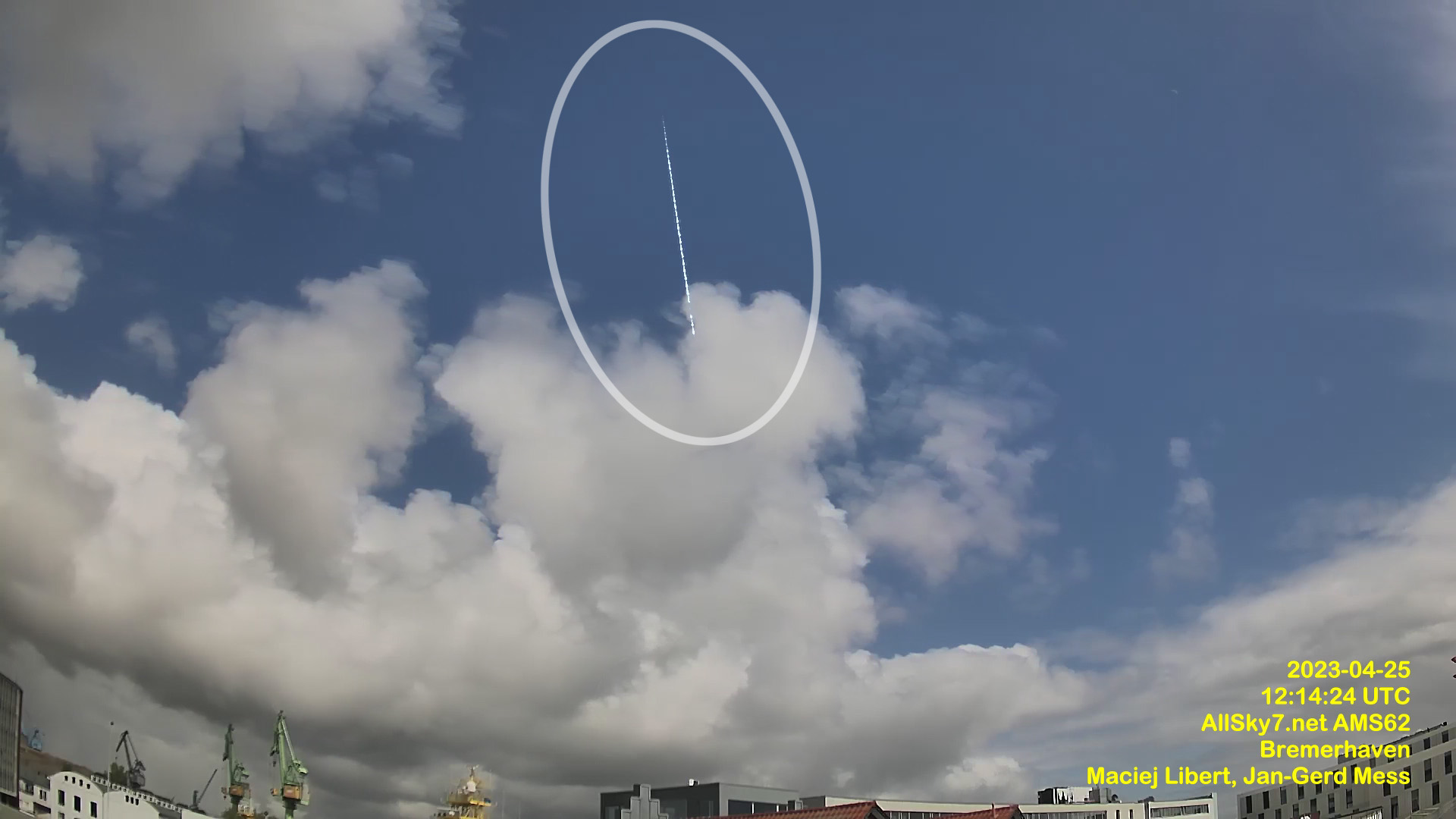
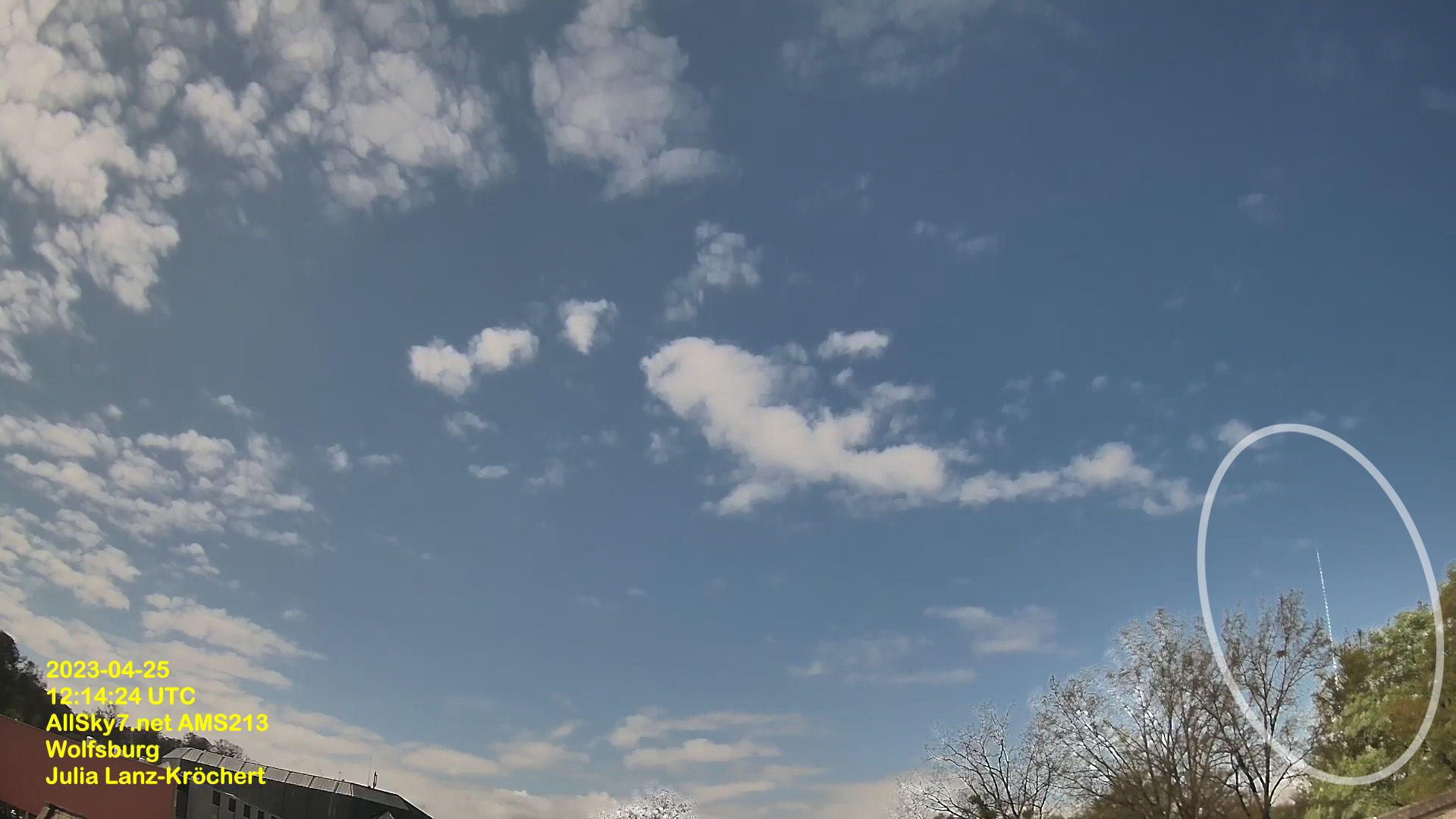
On Tuesday, April 25, 2023 at 2:14:24 PM CEST, a meteoroid with an estimated mass of 100 kg entered the Earth's atmosphere over northern Germany. The daylight fireball observed was visible to several eyewitnesses in Germany and the Netherlands. It was also recorded by our AllSky7 camera network. Due to widespread cloudy weather, only the cameras in Bremerhaven (AMS62) and Wolfsburg (AMS213) were able to capture the fireball. Initial analyses of the eyewitness reports and video recordings revealed that the meteoroid entered the atmosphere very steeply at an angle of approximately 80° and at a speed of about 20 km/s.
Already the next day there were first media reports in the local press about possible meteorite finds in Elmshorn, a town northwest of Hamburg. Residents in Irena-SendlerStraße heard a loud bang in the afternoon of April 25, 2023, around 2:15 PM CEST and found a deep hole in the garden. They called the fire department, which arrived with the emergency response unit. After examining the area, the fire department found a stone inside the hole. This was among other things, tested for radioactivity and ultimately deemed harmless and dug out. Another report mentions a roof hit.
Initial Assessment by the Arbeitskreis Meteore e.V.
Due to the reports and rumors, AKM member Carsten Jonas, together with Marco A. Ludwig (Observatory Neumünster), set out for Elmshorn on April 28 to examine the alleged meteorite finds. They were accompanied by a television crew from the North German Broadcasting Corporation.
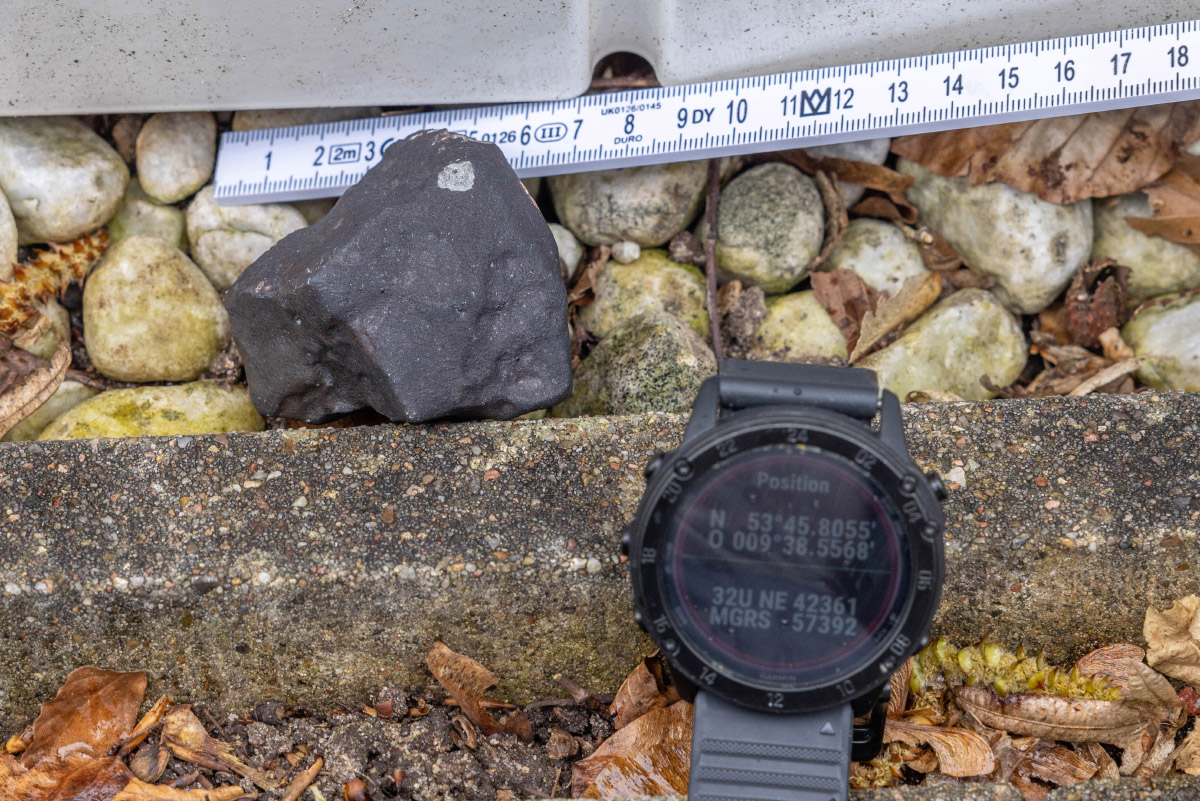
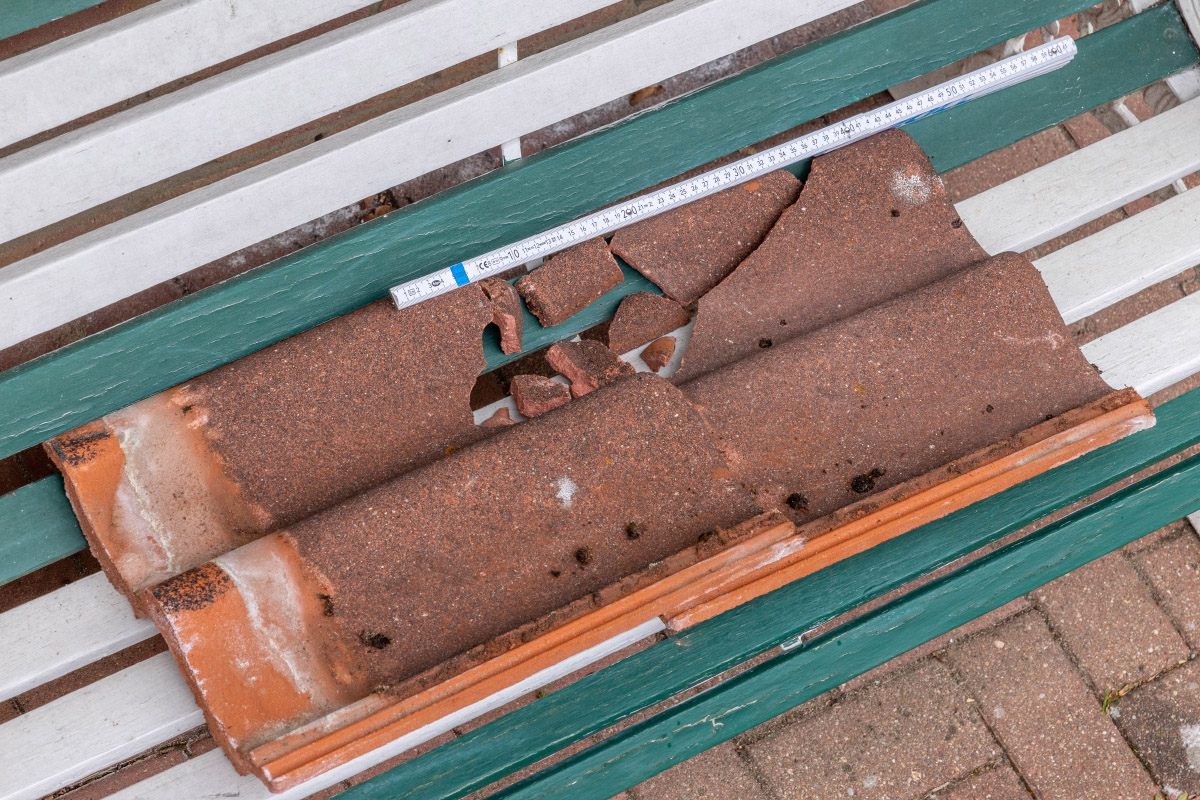
First, they visited the Labusch family on Iltisweg. Here, indeed, a meteorite had struck the house roof, bounced off, and then hit the metal fence of the neighboring property. After the family heard a loud bang and was startled, they went outside and found fragments of the roof tile on the driveway. Right next to the neighbor's fence lay the meteorite, which left a black mark on the fence. Carsten was able to clearly identify the stone as a meteorite and suspected that it was an ordinary chondrite. The owners kindly sent the meteorite immediately to Detlev Degering at the Felsenkeller Laboratory of the VKTA for gamma spectroscopic investigation. Among other things, the exact weight was determined to be 233.4 g there.
Roof hit in Iltisweg (Photo: Carsten Jonas)
Roof strike in Iltisweg (Photo: Carsten Jonas)
Another find was made on Gärtnerstraße. Around 2:00 PM, a woman parked her car to attend an appointment. When she wanted to leave again half an hour later, she found roof fragments and rock debris lying on the driveway. Together with her husband, she secured about 160 g of material. Here, too, a meteorite struck a roof tile and damaged it. Despite an intensive search in the vicinity of the impact area, Carsten, along with the couple, could not find any additional meteorites. A fragment was sent to the University of Münster for mineralogical examination and classification.
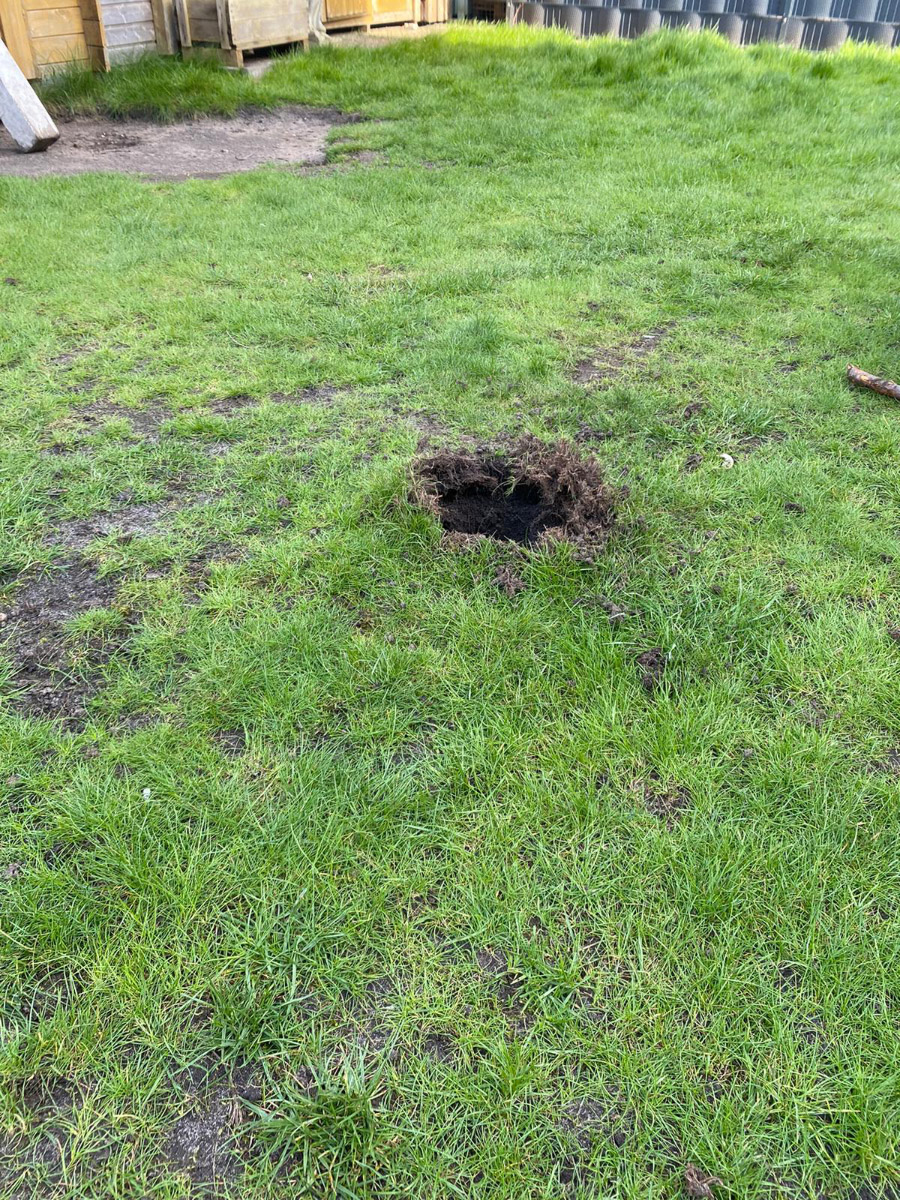
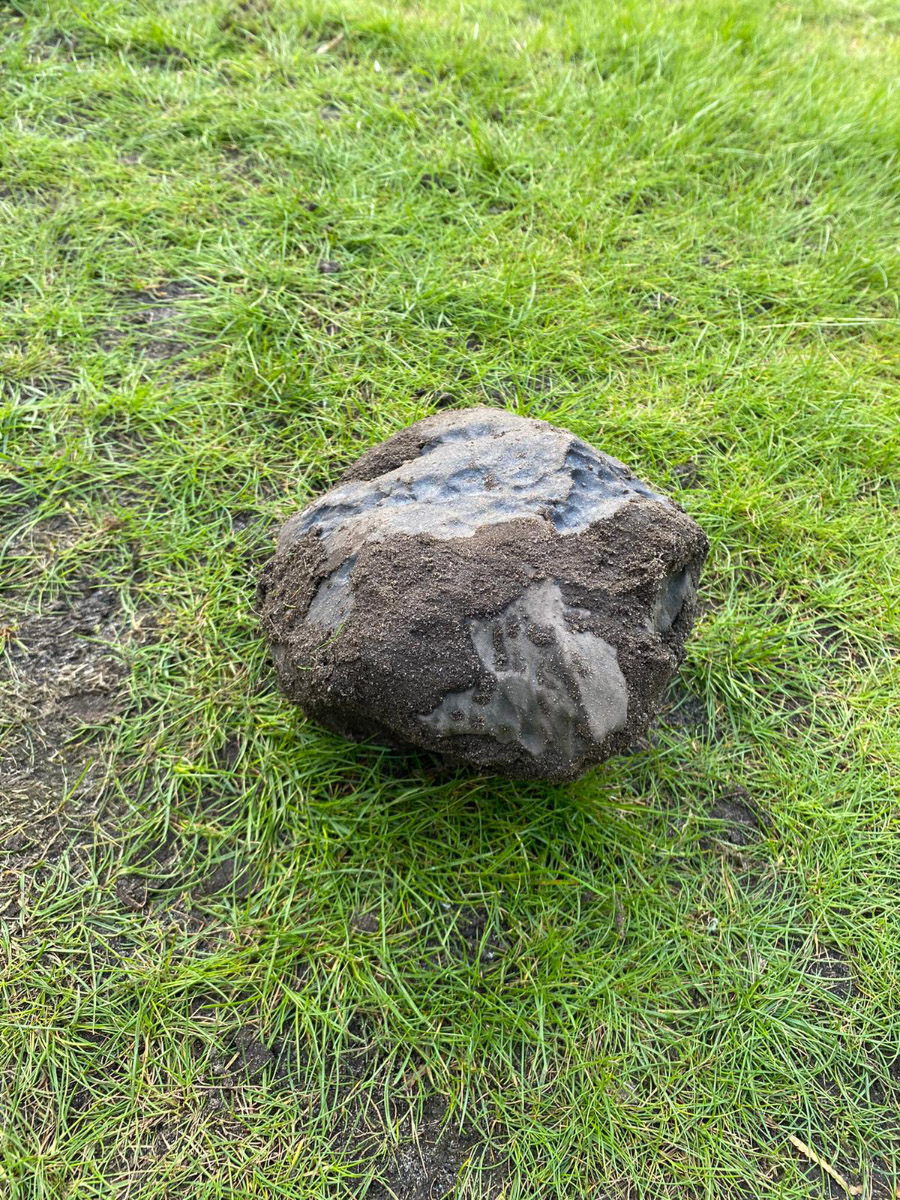
Finally, Carsten ended up in Irena-Sendler-Straße. Here occurred the most impressive case. While the Sahin family was sitting in the living room, they also heard a loud bang and checked to see what happened. As described in the press report, they eventually saw a large hole gaping in the garden behind the house. They then called the fire department, initially thinking it was an exploded gas line. Together with the fire department, they retrieved a stone from a depth of about 40 cm. Unfortunately, the meteorite was slightly damaged in the process, and small chipped fragments remained in the impact crater. The first contact between Carsten and the Sahin family proved difficult, as the family had unfortunately had bad experiences with a pushy reporter. Ultimately, Carsten was able to build trust and was invited to examine the meteorite and the impact site. It was also confirmed here that it was a genuine meteorite weighing a proud 3.7 kg.
On May 17, Carsten Jonas visited the Sahin family again. In tow, he had the NDR television team as well as a 3D scanner and a precision scale to measure the main mass as accurately as possible. The weight of the Elmshorn meteorite was determined to be 3724 g. Its dimensions are 180x138x105 mm. The NDR broadcasts were aired two days later and can be accessed again through the media library.
Through the measurement and digitization of the surface profile using the 3D scanner, Andreas Möller was able to create rendered videos using the “Blender” software. It is also now possible to determine the density of the meteorite.
One day before Carsten's visit again, a meteorite collector had the opportunity to dig up the Sahin family's garden and search for meteorite remains. The fragments found in the milligram range were immediately turned into profit and sold on the internet. Currently, the Sahin family still does not know what should happen with the meteorite. There are several purchase offers in the six-figure range from meteorite collectors from different countries. However, the family would prefer to make the meteorite accessible to the public. The purchase by a museum is also being considered.
Search Campaign of the Arbeitskreis Meteore e.V.
The confirmation of three meteorite falls in Elmshorn led to a spontaneous WhatsApp group, where members of the Arbeitskreis Meteore organized a joint search action. Thanks to the AllSky7 recordings and the exact locations and masses of the found meteorites, Mike Hankey (USA) was able to create an initial strewn field.
Thus, on Saturday, April 29, 2023, around 14:00, we met in front of a parking lot of a discount store in Elmshorn and worked out a plan for the day. The following AKM members, meteor and meteorite enthusiasts were involved in the search: Martina Hanke and Maciej Libert (Bremerhaven), Hartwig Lüthen (Hamburg), Mario Del Borrello (Hamburg), Peter Lindner (Hoyerswerda), Sirko Molau (Munich), Andreas Möller (Berlin), André Knöfel (Lindenberg), and Michael Theusner (Hamburg). On Sunday, Petra and Jörg Strunk from Herford joined us.
During the search in Elmshorn, we had lively exchanges with Mike Hankey from the USA, who provided us with the latest strewn field calculations. So, we first combed a search area near the three confirmed meteorite falls, in the northwest of Elmshorn. Many sidewalks and streets had probably already been cleaned, as a large part of Elmshorn appeared impeccably clean. A quick look at the city's cleaning service website showed us that the streets were cleaned weekly and significant places even daily. Here, we had little success. Additionally, a large part of the residents were already informed about the event and had likely picked up any conspicuous-looking stones from the street. Hence, we focused our search on fields, meadows, industrial areas, and backyards. Unfortunately, it turned out that only a very small area of the search zone was deemed worthwhile. Many fields had been plowed or planted recently, and on others, the vegetation was already too high to make a search worthwhile.
Our first search area focused on the area of the first two impacts in the residential area north of Hasenbusch Street. We had to note that the streets and gardens were very well-kept and clean, so the chances of finding something seemed rather low. Lawns and the area around a playground looked promising. Later, we shifted the search area to the vicinity of Gärtnerstraße, unfortunately without success. After gathering initial experience, we decided to comb through the cemetery of Elmshorn on Sunday morning, as it was one of the few places that could be extensively searched. In the afternoon, our search shifted toward the city center, as we suspected small fragments and meteorite splinters here.
Despite intense searching and planning, we were unsuccessful and found no meteorites. Besides muscle soreness and declining motivation, we developed great respect for professional searchers who spend weeks in the fall area.
Further Meteorite Finds
Other meteorite hunters were luckier. Ewelina Burska and Maciej Burski already found two pieces weighing 20 g and 9 g respectively on a sidewalk and in the grass on Saturday, April 29. The location was near Kaltenhof street. Presumably, both meteorites were separated shortly before impact.
Another fragment was found a day later, on Sunday afternoon, in a parking lot in front of the Jacobs Douwe Egberts coffee factory grounds. The piece, discovered by Svend Buhl, also weighed just under 9 g. Annoyingly, this parking lot was thoroughly searched the day before by Sirko and later by Michael, Peter, and Andreas.
Another fragment weighing only 2 g was discovered on May 5 near FritzReuter-Str. 21. The finder, Ingo Herkstroeter, describes the experience as follows: "Well, then it suddenly happened: I found a meteorite! My first German one, the first fresh fall, or actually the first meteorite I've ever found. The whole situation seemed (and still seems) completely surreal to me. There was this small black stone, and I picked it up, turning it a little. What shone back at me was no scratch, no chalky crust, it was fresh meteoritic matrix with a wonderful crust. All I could say was: I got one!"
In early June, Łukasz Smuła announced on the website ART&MET Meteorites Collection that he, together with his wife, found 14 meteorites with a total mass of 99.11 g in Elmshorn. Within two weeks, they covered an incredible distance of 601 km on foot. The announced discovery sites are located on Ferdinand-Hanssen-Weg, Moltkestraße, and Elmshorn Cemetery.
Dieter Heinlein also reported another recently discovered find by residents. On May 1, locals found a meteorite with a mass of only 1.09 g on the terrace of their property on Stettiner Straße.
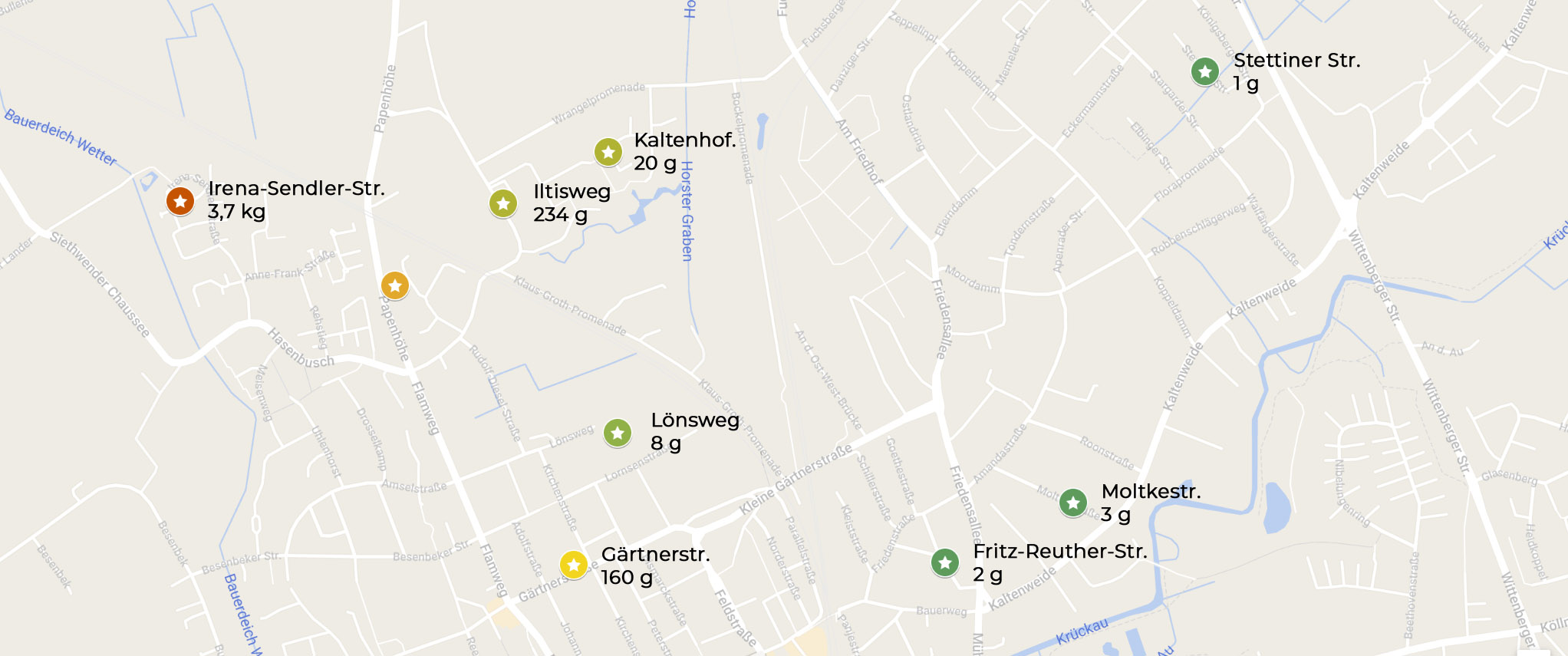
As of the current status (June 18, 2023), there are 21 locations where meteorites have been discovered. A total of 32 fragments with a total mass of about 4258 g have been recovered. Due to the distribution of meteorite finds in the strewn field, it can be said with great certainty that the meteorite on Irena-Sendler-Straße is the main mass.
Map of known locations (As of: June 18, 2023, Google Maps)
Supposed meteorite finds by residents in Kirchenstraße and by children on a playground were examined by members of the Arbeitskreis Meteore. The finds are not meteorites.
Recording of Meteorite Fall by Surveillance Cameras
While we were wandering through Elmshorn on Sunday afternoon to search for more fragments of the meteorite, Mahmut Sahin contacted us and excitedly reported a discovery. Curious, Sirko Molau and Andreas Möller drove to the Sahin family and had the honor of seeing the magnificent specimen of the main mass.
The sensation, however, is that two surveillance cameras on the property were able to record the time of the meteorite fall. Although there are no video recordings of the meteorite fall itself, you can hear the approaching meteorite as an increasing hissing sound and the massive impact on the lawn in the audio track of the cameras. One of the surveillance cameras was located at the entrance of the house and was 18 meters from the impact. The house was between the camera and the impact of the meteorite, so the impact sounds were muffled. The second camera filmed the interior of a garden shed 14 meters from the impact site.
This is probably the first time a meteorite impact has been recorded from close proximity. The audio files can be listened to on the website of the Arbeitskreis Meteore e.V. With the help of the two recordings, the time of the impact was determined to be exactly 14:16:21 CEST. The blind flight time was therefore 1 minute and 55 seconds. There is a certain uncertainty of a few seconds since no camera recorded the end of the luminous trail. In addition to the impact noise, the garden house camera was also able to capture the sonic boom. Thus, we are able to reconstruct the exact sequence of the meteorite fall. (Times in CEST)
14:14:24 - Recording of the fireball by AllSky7 cameras
14:15:07 - Three sonic booms in quick succession
14:15:12 - Fourth and strongest sonic boom followed by rumbling
14:16:18 - Sound of the approaching meteorite
14:16:21 - Impact on the lawn
Recording 1: The surveillance camera in front of the house was 18 meters away from the impact. A house was located between the camera and the meteorite impact.
Recording 2: The surveillance camera was located in a garden shed about 15 meters from the meteorite impact.
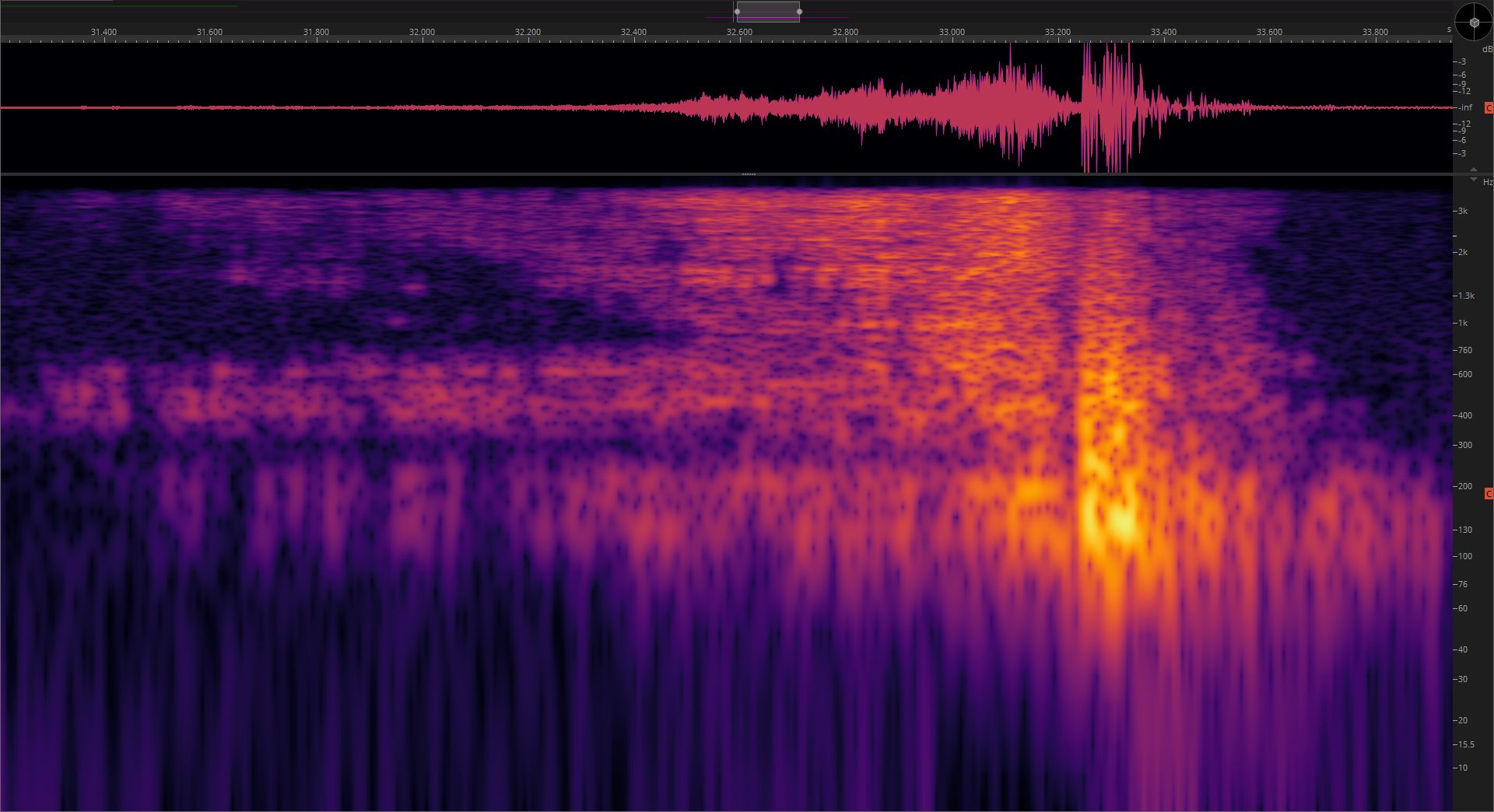
André Knöfel analyzed the audio signal of the impact and visualized the frequency spectrum using the program SpectraLayers by Steinberg. The frequencies can be identified in a range from 100 Hz to 4 kHz. Unfortunately, most surveillance cameras do not provide higher frequencies in the audio signal, as high-frequency components are cut off. The visualization shows that 1.4 seconds before the impact, the whistling of the approaching meteor is audible from the higher frequencies and becomes deeper over time, a typical Doppler effect. Additionally, there is almost silence shortly before the impact. A further analysis shows that 2 seconds before the impact, a signal was already recorded in the lower frequency range between 300 and 700 Hz. Moreover, a relatively constant variation in volume was detected in the audio signal. This is presumably the rotational noise of the meteor, which therefore hit with a spin of about 4 rotations per second.
Frequency spectrum of the meteor impact created with SpectraLayers by Steinberg
Analysis of the Elmshorn Meteorite
Currently, the meteorite that struck the Labusch family's roof is being examined in the Dresden rock cellar of the VKTA. Just a few days later, the short-lived nuclides Aluminum-26 and Manganese-54 were detected. Thus, it was confirmed that it is indeed a freshly fallen meteorite.
The fragment found on Gärtnerstraße is currently being examined at the Institute of Planetology at the University of Münster by Dr. Markus Patzek and Prof. Dr. Addi Bischoff for its mineral composition. The meteorite has already been classified as an ordinary chondrite of type H. This means it has a particularly high iron content. Additionally, the age of the meteorite, originally from the asteroid belt between Mars and Jupiter, is estimated to be 4.5 billion years.
The meteorite fall in Elmshorn is the second in Schleswig-Holstein within just four years. In September 2019, there was also a daylight fireball. Even then, a resident found a meteorite weighing only 24.5 g in the garden. Thanks to the AllSky7 network and the systematic search, more than 4 kilograms of meteorite material were recovered in Elmshorn. The meteorite fall impressively demonstrates how professional science, amateur astronomical associations, and meteorite hunters can work together effectively and efficiently. Even though the meteorite has not yet been officially confirmed at the present time, it will surely enter the history books under the name "Elmshorn."